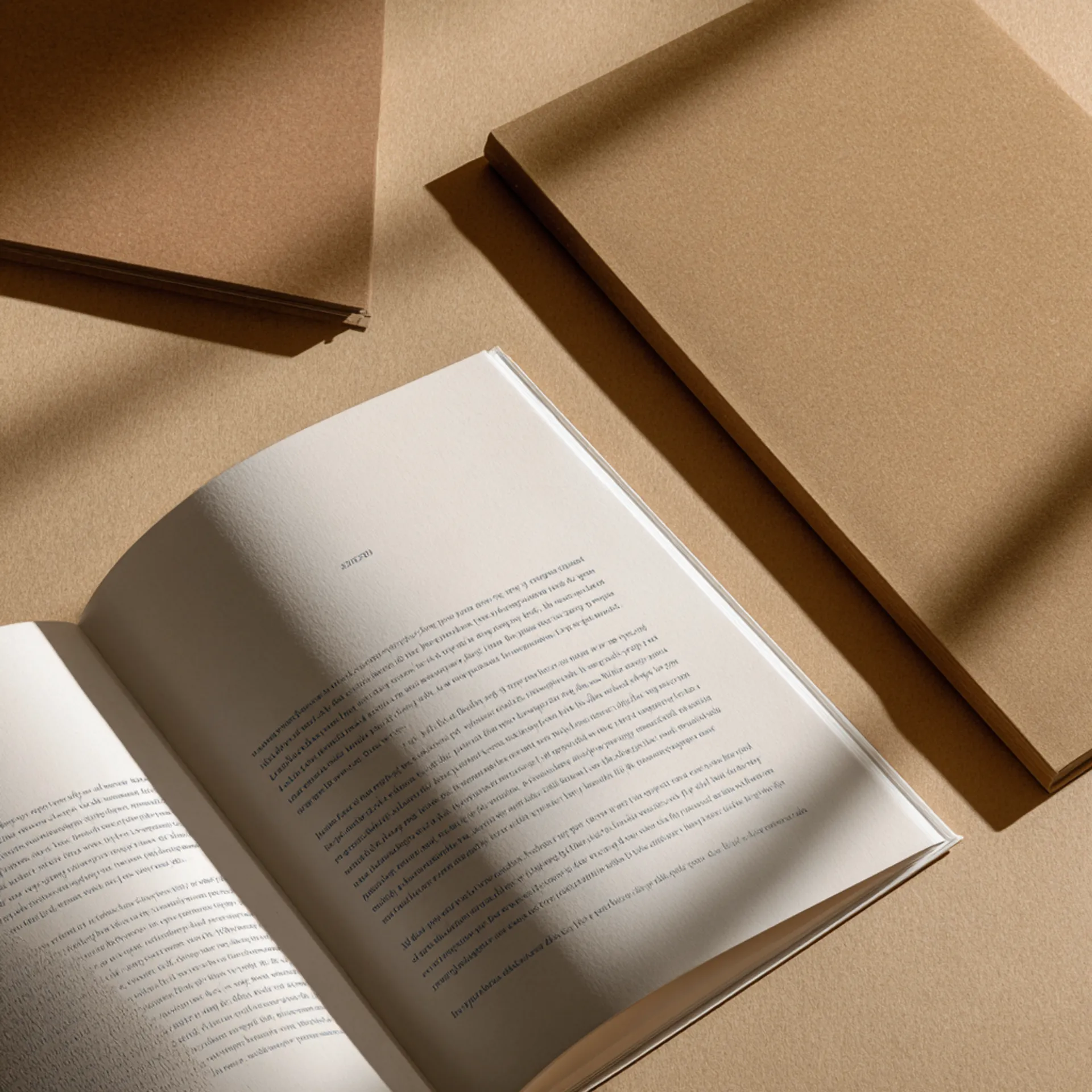
Cookbook Printing
Full-color coated interiors calibrated for food photography, lay-flat binding that holds open on a kitchen counter, and laminated covers that resist oil and splatter — printed for the format that has to perform in two places: the bookshelf and the stovetop.
Built for How Cookbooks Are Actually Used
Food Photography Color Calibration
Food photography lives in a narrow color range — warm skin tones, golden browns, saturated greens, and whites that must stay neutral. We calibrate press settings specifically for the food photography palette, not generic CMYK defaults.
Lay-Flat Binding That Stays Open
Smyth-sewn hardcovers, lay-flat adhesive binding, Wire-O, and Otabind — each engineered to hold open on a kitchen counter without hands, a cookbook holder, or a jar propping the book open.
Kitchen-Durable Covers and Pages
Gloss-laminated covers that resist oil, water, and food splatter. Coated interior pages that wipe clean. A cookbook that degrades after six months of kitchen use is a production failure, not a wear-and-tear inevitability.
Full-Color Coated Interiors
Every interior page is full color on 80lb or 100lb coated stock — the only appropriate production spec for cookbooks with photography. Uncoated paper mutes food photography into flat, appetizing images.
Who This Page Is For
This page is for cookbook authors, food photographers, recipe developers, culinary publishers, community organizations producing fundraiser cookbooks, chefs producing personal titles, and food bloggers moving to print — printing cookbooks in runs of 25 to 5,000 copies. Whether you are producing a hardcover cookbook with professional food photography for retail distribution, a softcover recipe collection to sell alongside a cooking class, a community fundraiser cookbook for a church or nonprofit, or a chef’s personal cookbook documenting a restaurant’s signature dishes, the production guidance here applies.
Cookbook printing is the most production-intensive category in consumer book publishing. Every page is full color. The paper must be coated. The binding must allow the book to lie open on a counter without hands. The cover must survive years in a kitchen environment — oil, water, flour, heat proximity. And the food photography must be color-calibrated to a standard that makes the food look appetizing in print, not just on screen — a yellow-green cast on a plate of pasta or a blue-shifted white plate can make appetizing food look unappetizing in print, even if the photography is excellent.
Most printers can print color on coated paper. Cookbook printing requires production decisions and press calibration specific to this genre. This page explains what those decisions are, where cookbook production fails, and how to spec the project correctly.
What Changes in Production for Cookbooks
Cookbook production combines the full-color interior demands of graphic novels with the durability requirements of textbooks and the lay-flat binding expectations of journals — all in a product that must also survive a kitchen environment. No other book category stacks this many production requirements simultaneously.
Food Photography Color Calibration
Food photography occupies a specific and unforgiving color palette. Warm skin tones on hands and arms in action shots. Golden browns on baked goods, grilled proteins, and roasted vegetables. Saturated greens in salads, herbs, and produce. Neutral whites on plates, bowls, and backgrounds. Deep reds in tomato sauces, berries, and wines. Each of these color families must reproduce accurately in CMYK, and the human eye is highly sensitive to errors in food color — a slightly green shift on roasted chicken makes it look raw, a magenta cast on white plates makes the entire image feel wrong, and a desaturated green on a salad makes it look wilted.
Standard CMYK conversion profiles (the default profiles that ship with Photoshop and most design software) are calibrated for general-purpose color accuracy, not food-specific accuracy. They handle the gamut compression from RGB to CMYK in a way that works for most photography but does not prioritize the food-relevant color families.
We apply a food-photography-calibrated press profile that does three things:
Preserves warm midtones. The golden-brown range — the color of bread crust, roasted garlic, caramelized onions, pie crust — is the most important color family in food photography. Standard profiles can cool or desaturate these tones during conversion. Our profile preserves warmth in the midtone range.
Maintains neutral whites. White plates, marble counters, and light backgrounds must stay neutral — no color cast. A 2% shift toward cyan or magenta that would be invisible on a colored background becomes immediately noticeable on a white plate. We set white point calibration at press setup and verify on the first sheets.
Saturates greens without shifting yellow. Fresh produce, herbs, and salad greens need saturation to look fresh. But increasing green saturation in CMYK can shift adjacent yellow tones, making golden colors look slightly green. Our profile handles this transition without cross-contamination.
For cookbooks with significant photography (more than 20 photographic pages), we strongly recommend a physical press proof. Food photography color accuracy cannot be reliably evaluated on screen because the gamut difference between RGB and CMYK is most visible in exactly the color families that food photography relies on — warm midtones, neutral whites, and saturated organics.
Coated Stock for Photography and Kitchen Durability
Cookbook interiors are printed on coated stock — paper with a clay-coated surface that holds ink on the surface rather than absorbing it into the fibers. This is non-negotiable for cookbooks with photography. Uncoated paper absorbs ink, which softens detail, mutes color, and produces a flat, unappetizing reproduction of food images.
Weight and durability. The standard for cookbooks is 80lb or 100lb coated stock. 80lb is adequate for most cookbooks and keeps the book lighter (a consideration for 200+ page books). 100lb produces a more substantial page feel, resists dog-earing better, and provides more rigidity for pages that will be handled with wet or oily hands. For cookbooks intended for heavy kitchen use (professional kitchen reference books, daily-use family cookbooks), 100lb is the better choice. For retail cookbooks where weight and shipping cost matter, 80lb is standard.
Finish. Gloss coated stock produces the most saturated color and the sharpest photographic detail — food images look their most vivid on gloss. The tradeoff is glare under kitchen lighting, which can make the page difficult to read at certain angles. Matte coated stock reduces glare and produces a softer, more contemporary aesthetic — many modern cookbook designers prefer matte because it photographs better for social media and looks more editorial. Silk (satin) coated stock splits the difference: moderate sheen, good color saturation, minimal glare. We stock all three and can send samples.
Spill resistance. Coated stock inherently resists liquid absorption better than uncoated paper. A splash of water or a drop of olive oil will bead on a coated page and can be wiped off if addressed quickly. Uncoated paper absorbs liquids immediately and permanently. This is a practical durability advantage of coated stock in a kitchen-use product — it is not marketed as “waterproof,” but it is meaningfully more resistant to the splatter that cookbooks encounter.
Lay-Flat Binding: The Non-Negotiable Requirement
A cookbook that does not stay open on a counter is a cookbook that fails its primary use case. The reader’s hands are occupied with food — holding a knife, stirring a pot, measuring ingredients. They cannot hold the book open. Lay-flat binding is not a premium feature for cookbooks; it is a functional requirement.
Smyth-sewn case binding (hardcover). The premium standard for retail cookbooks. Signatures are stitched with thread, allowing the spine to flex and the pages to open nearly flat. Not completely flat — there is a slight page curvature near the spine — but flat enough for comfortable recipe reading. Smyth sewing is also the most durable binding, surviving hundreds of openings to the same page (common in cookbooks where favorite recipes are used repeatedly). For hardcover cookbooks at retail ($25–40 price point), Smyth sewing is the expected binding method.
Otabind (lay-flat softcover). A cold-set adhesive binding method that uses a hollow spine — the cover spine separates from the text block spine when the book is opened, allowing the pages to drop flat. Otabind produces the best flat-opening performance of any softcover binding method. It looks like a standard perfect-bound book on the shelf (flat spine, printable spine text) but performs dramatically better when open. For softcover cookbooks where lay-flat is essential, Otabind is the recommended binding.
Wire-O and spiral. Open completely flat and fold back 360 degrees. The most functional bindings for kitchen countertop use — the book opens to any page and stays there without any assistance. Wire-O and spiral are common for community cookbooks, recipe card-style collections, and cookbooks intended primarily for kitchen use rather than bookshelf display. The tradeoff is shelf appearance: Wire-O and spiral books do not have a flat spine, do not stack like books, and read as “functional” rather than “premium” on a retail shelf.
Lay-flat adhesive binding. Individual sheets bound with flexible adhesive. Opens completely flat. More expensive than Otabind or standard perfect binding. Best for cookbooks where full-spread photography (a two-page food image with no gutter loss) is a core design element.
Standard perfect binding (PUR or EVA). Does not lay flat. The book closes itself when released. Not recommended for cookbooks unless the book is a reading-focused narrative (a food memoir, a culinary history) rather than a recipe-use book. Even then, Otabind at a modest cost increase produces a significantly better user experience.
Cover Durability in Kitchen Environments
Cookbook covers endure conditions that no other book format encounters: splattered oil, wet hands, flour-dusted fingers, proximity to heat, and repeated cleaning. The cover lamination is not cosmetic — it is a protective layer that determines how long the cookbook remains presentable.
Gloss lamination. The most kitchen-durable option. Gloss lamination creates a sealed, non-porous surface. Water beads and wipes off. Oil can be cleaned with a damp cloth and does not penetrate the surface. Gloss-laminated covers can survive years of kitchen use with minimal degradation. The tradeoff is aesthetic — gloss is reflective, produces glare under direct lighting, and reads as “traditional” rather than “modern” in the current cookbook design landscape.
Matte lamination. More contemporary in appearance — the dominant cover finish on modern cookbook design. The tradeoff in a kitchen environment: standard matte lamination is microporous, which means oil can absorb into the surface over time, leaving faint stain marks that cannot be fully cleaned. For cookbooks that will see heavy kitchen use, standard matte is not the ideal choice.
Soft-touch matte lamination. A thicker matte film with better stain resistance than standard matte. Soft-touch resists oil absorption better (though not as well as gloss) and adds a tactile premium feel — a subtle velvet texture that readers notice when they pick up the book. For cookbook designers who want a matte aesthetic with better kitchen durability, soft-touch is the recommended compromise.
Lamination on interior pages. Not standard and not typically necessary. Coated interior pages already resist casual splatter. For extreme-use environments (professional kitchen reference books, cooking school manuals), a light aqueous coating on interior pages adds an additional layer of protection. This is a specialty option and adds per-page cost.
Typical Specs for Cookbooks
Retail Hardcover Cookbook
| Spec | Recommended | Notes |
|---|---|---|
| Trim size | 8 × 10 in or 8.5 × 11 in | Standard for cookbooks with food photography; allows large-format images and comfortable recipe layouts |
| Binding | Smyth-sewn case bound | The retail cookbook standard; opens nearly flat, extremely durable |
| Interior paper | 100lb gloss, matte, or silk coated | 100lb for premium feel and kitchen durability; 80lb acceptable for cost-sensitive runs |
| Cover | Printed case wrap with gloss lamination | Gloss for maximum kitchen durability; soft-touch matte for modern aesthetic with moderate durability |
| Interior color | Full CMYK throughout | Every page is a color page |
| Page count | 150–300 pages | Retail cookbooks typically 200–250 pages |
| Endsheets | Printed or colored | Printed endsheets with a signature recipe, ingredient illustration, or conversion table |
| Extras | Ribbon marker | Useful for marking a frequently used recipe |
Softcover Cookbook
| Spec | Recommended | Notes |
|---|---|---|
| Trim size | 8 × 10 in, 7 × 10 in, or 6 × 9 in | 6 × 9 for smaller, more personal cookbooks and food memoirs |
| Binding | Otabind (lay-flat) | Strongly recommended over standard perfect binding for any cookbook used in a kitchen |
| Interior paper | 80lb matte or silk coated | 80lb balances quality and cost for softcover editions |
| Cover stock | 14pt C1S with gloss or soft-touch matte lamination | 14pt for rigidity; the cover endures more handling than on a standard book |
| Interior color | Full CMYK throughout | |
| Page count | 100–250 pages |
Community / Fundraiser Cookbook
| Spec | Recommended | Notes |
|---|---|---|
| Trim size | 6 × 9 in or 8.5 × 11 in | 8.5 × 11 for traditional community cookbook format; 6 × 9 for a more modern, book-like feel |
| Binding | Wire-O or spiral | Functional, lay-flat, cost-effective; the standard for community cookbooks |
| Interior paper | 60lb–80lb white uncoated (text-only) or 80lb coated (with photography) | Uncoated for text-only recipe collections at lower cost |
| Cover stock | 12pt C1S with gloss lamination | Gloss for kitchen durability, even on budget-friendly editions |
| Interior color | B&W for text-only; full color with photography | B&W community cookbooks cost a fraction of full-color editions |
| Page count | 50–200 pages |
Common Mistakes We See
- Interior printed on uncoated paper with food photography. Uncoated paper absorbs ink, softening detail and muting color. Food that looks vivid and appetizing on screen prints flat and dull on uncoated stock. If the cookbook has photography, the interior must be coated paper. No exceptions for quality results.
- Standard perfect binding on a kitchen-use cookbook. The book does not stay open. The reader fights it every time they try to follow a recipe. Lay-flat binding (Smyth-sewn, Otabind, Wire-O, or lay-flat adhesive) is functionally required for any cookbook used during cooking.
- Food photography converted to CMYK using a generic profile. Standard CMYK conversion cools warm tones, desaturates greens, and can introduce color casts on white backgrounds. For food photography, use a profile calibrated for warm midtones and neutral whites — or submit RGB files and let us apply our food-calibrated profile during prepress.
- Matte lamination on a cookbook intended for heavy kitchen use. Standard matte lamination absorbs oil over time. For kitchen-durable covers, use gloss lamination or soft-touch matte (which resists oil better than standard matte).
- Trim size too small for the recipe layout. Cookbooks need space for recipe text, ingredient lists, method steps, cook times, serving sizes, and — if photographed — a food image, all on a single page or spread. At 5.5 × 8.5, this is extremely cramped. Most cookbooks need 7 × 10 or 8 × 10 minimum to accommodate the layout without feeling dense.
- Full-bleed food photos designed without gutter clearance. A hero image of a plated dish with the plate center in the gutter of a two-page spread will have the plate split by the binding. Design full-bleed spreads with the focal point offset from the center, and maintain a clear zone at the gutter appropriate for your binding method.
- No conversion table or measurement reference. Not a print issue, but a content issue we see frequently. Cookbooks sold outside the author’s home region (or online) benefit from a conversion table (cups to grams, Fahrenheit to Celsius) in the back matter or on a printed endsheet. It is a small addition that significantly improves the book’s utility.
- White balance inconsistent across photo shoot sessions. If the cookbook photography was shot over multiple sessions with different lighting, the white balance between images can vary — warm in one session, cool in another. This produces visible color inconsistency between recipe pages in print. We correct for gross white balance errors during prepress, but the best fix is consistent lighting and white balance across all photo sessions.
Preflight Checklist
Before submitting files for a cookbook:
- All files are CMYK color mode (or RGB for food-calibrated conversion by our prepress team)
- All food photography at 300 DPI minimum at final printed size
- Interior PDF is single-page (not spreads), pages in sequential order
- Cover PDF includes 0.125” bleed on all sides; spine width matches our template
- All interior pages include 0.125” bleed on full-bleed photographic pages
- Two-page spread images designed with gutter clear zone appropriate for binding method
- White balance consistent across all food photography (or flagged for correction)
- Total ink coverage does not exceed 300% on any page; rich blacks built at 60/40/40/100
- Fonts embedded — including fonts in recipe layout elements, headers, and placed graphics
- Spine width calculated for coated stock (coated paper has a different caliper than uncoated)
- Recipe text verified: ingredient lists, measurements, cooking times, serving sizes complete and accurate
- ISBN barcode on back cover for retail distribution
- For hardcover: endsheet art (if printed) includes hinge fold safe zones
How a Cookbook Project Moves Through Production
1. File Intake and Spec Confirmation
You submit interior and cover PDFs through our upload portal. We confirm trim size, paper stock and finish (gloss, matte, or silk), binding method, cover lamination, and quantity. For hardcover cookbooks with printed endsheets, we confirm endsheet content and stock.
Genre-specific checkpoint: We verify that the interior is on coated stock (not uncoated), confirm the binding method is lay-flat capable, and review the cover lamination for kitchen durability. We assess the food photography for color mode, resolution, and white balance consistency. If the files are RGB, we confirm whether you want us to apply our food-calibrated CMYK conversion or if you prefer to manage conversion yourself.
2. Preflight and Color Proofing
Preflight checks resolution, bleed, margins, font embedding, color mode, and total ink coverage on every page. For cookbooks, we add food photography-specific checks: white balance consistency across images, neutral white reproduction on plates and backgrounds, warm midtone preservation in golden-brown food tones, and green saturation on produce and herbs.
You receive a digital proof for approval. For any cookbook with food photography, we strongly recommend a physical press proof (adds 3–5 business days). Food color accuracy on coated stock cannot be reliably evaluated on screen — the gamut compression from RGB to CMYK is most visible in warm browns, neutral whites, and saturated greens, which are the core colors in food photography. The press proof is printed on your actual interior stock with actual press conditions, so what you approve is what ships.
Genre-specific risks: Warm tones cooling during CMYK conversion (golden-brown food appearing grayish). White plates developing a color cast (pink, green, or blue tint). Green produce desaturating and looking wilted. Inconsistent white balance between recipes photographed in different sessions.
3. Printing and Binding
Cookbook interiors are full-color on coated stock, which means longer drying intervals than B&W printing and careful anti-set-off measures to prevent wet ink from transferring between facing pages.
Smyth-sewn hardcovers: Signatures are printed, dried, folded, collated, and sewn. Cover cases are made, endsheets tipped in, and the text block cased in. Laminated dust jackets (if applicable) printed and applied separately. Turnaround is 15–20 business days from proof approval.
Otabind softcovers: Signatures are printed, dried, folded, collated, and bound with the Otabind cold-set adhesive method. The hollow spine construction is formed during binding. Covers are printed, laminated, and applied. Turnaround is 12–15 business days.
Wire-O: Pages are printed, dried, trimmed, punched, and bound with double-loop wire. Covers printed and laminated before binding. Turnaround is 10–12 business days.
Genre-specific risks:
- Set-off on high-coverage pages. Full-bleed food photography can exceed 250% total ink coverage. Pages with adjacent high-coverage images face set-off risk if drying is insufficient. We manage drying intervals based on the maximum ink coverage in the file.
- Spine stress on thick cookbooks. A 300-page cookbook on 100lb coated stock is a physically heavy book. The binding must handle the weight of the text block — PUR adhesive alone may not be sufficient. Smyth sewing distributes the weight across stitched signatures. For Otabind softcovers above 250 pages on 100lb stock, we reinforce the binding.
- Cover curl. Laminated covers on coated stock can curl in humid kitchen environments because the laminate and the paper stock absorb moisture at different rates. Gloss lamination on both sides of the cover stock (or a compensating UV coating on the interior of the cover) prevents curl. We apply anti-curl treatment as standard on cookbook covers.
4. Packaging and Fulfillment
Finished cookbooks are shrink-wrapped individually or in packs, then boxed. Hardcovers with dust jackets are individually sleeved. For retail cookbooks, we can pack in case quantities specified by the retailer or distributor.
We ship to your address, your distributor, or multiple locations. For cookbooks debuting at a food festival, farmer’s market, or bookstore event, we ship directly to the venue.
Genre-specific consideration: Cookbooks are heavy. A 200-page hardcover on 100lb coated stock weighs 2–3 lbs. per copy. Shipping costs for cookbooks are higher per unit than for standard books. Factor shipping weight into your distribution planning — free shipping on orders of 100+ copies offsets this, but below 100 copies, the per-unit shipping cost is noticeable.
Design and File Preparation
Food Photography for Print
The quality of the food photography determines the quality of the cookbook more than any other single factor. A cookbook with mediocre food photography on perfect paper with perfect binding still looks mediocre. A cookbook with excellent food photography on appropriate paper with appropriate binding looks excellent.
Production-relevant photography guidance:
Lighting consistency. All food photography should be shot under the same lighting conditions (natural light, studio strobes, or continuous light — pick one and hold it throughout). Mixed lighting produces mixed white balance, which creates visible color inconsistency between recipe pages in print. If shooting over multiple sessions, match the color temperature and light quality across sessions.
White balance. Set a manual white balance using a gray card at the start of every shooting session. Auto white balance shifts between shots and produces the inconsistency that requires correction in post. Consistent capture white balance reduces the need for per-image correction and produces a more uniform printed result.
File format. Shoot RAW and process to TIFF or high-quality JPEG at 300 DPI minimum at the final printed size. RAW files give you the latitude to correct white balance and exposure in post without degrading image quality. JPEG-originated files lose quality with each save cycle.
Background and prop consistency. The plates, surfaces, linens, and props should maintain a consistent visual language throughout the book. Inconsistency in props — a rustic wood surface on one page, a sterile white background on the next, a marble counter on the third — creates visual incoherence in print that is amplified by the physical proximity of pages in a bound book.
Recipe Layout
Cookbook layouts must balance photographic impact with recipe usability. The reader needs to find and follow the recipe without hunting — ingredient list, method steps, timings, and serving sizes must be immediately accessible.
- Ingredient list. Left-aligned, clearly separated from the method steps. Ingredients listed in the order they are used in the method.
- Method steps. Numbered, with adequate leading between steps. Each step should be brief enough to read at a glance from a kitchen counter distance.
- Cook times and serving sizes. Prominently placed — typically at the top of the recipe alongside the recipe title, or in a sidebar callout.
- Photography placement. Full-page or half-page, always facing or adjacent to its recipe. A food photo separated from its recipe by a page turn reduces the impact and creates a disconnected reading experience.
For authors preparing files independently, we provide templates and a spine width calculator calibrated for coated stock caliper. Full specs are in the file preparation guide.
Spec Downloads and Tools
We provide production tools designed for cookbook printing workflows:
- Cover template generator — Enter your page count and interior stock (coated stock has different caliper than uncoated), and get a cover template with exact spine width, bleed marks, and safe area guides. Available as PDF and Adobe Illustrator files.
- Spine width calculator (coated stock mode) — Standard spine calculators use uncoated paper caliper. Cookbooks use coated stock, which has a different caliper-per-sheet. Our calculator uses the correct values.
- Food photography color checklist — Pre-print review checklist for food photography: white balance verification, CMYK conversion check, neutral white test, warm tone preservation, and green saturation evaluation.
- Recipe layout template — InDesign template with pre-built recipe page grids (full-page photo + recipe, half-page photo + recipe, text-only recipe) for common cookbook trim sizes. Includes paragraph styles for ingredients, method steps, headings, and cook time callouts.
- Paper sample kit — Request physical samples of our coated stocks in gloss, matte, and silk finishes at 80lb and 100lb weights. See how food photography reproduces on each surface before committing.
These tools are available in our Resources section. Designers and photographers who work with our templates and color checklist submit production-ready files at a higher rate, which means fewer preflight cycles and faster turnaround.
Trust Signals
Production volume: Origin Books prints cookbooks for food authors, chefs, culinary publishers, food bloggers, community organizations, and cooking schools. Our cookbook production ranges from 50-copy community fundraiser recipe books to 5,000-copy retail hardcovers with professional food photography and national distribution.
Food photography calibration: We apply a food-photography-specific CMYK press profile calibrated for warm midtones, neutral whites, and saturated organic greens — the color families that generic profiles handle poorly. We verify color on press with a spectrophotometer and offer physical press proofs for all photographed cookbooks.
Lay-flat binding. Smyth-sewn case binding, Otabind, Wire-O, spiral, and lay-flat adhesive binding — all performed in-house. We default to lay-flat-capable binding for every cookbook order and flag non-lay-flat binding selections during spec confirmation.
Kitchen durability. Gloss lamination and soft-touch matte lamination for kitchen-resistant covers, anti-curl treatment on laminated covers, and coated interior stock that resists casual splatter — all standard in our cookbook production workflow.
Finishing equipment. Kluge foil stamping press, UV coating line, and three-knife trimmer with digital measurement — plus Smyth sewing and Otabind capability for the lay-flat bindings that cookbooks require.
For the full selection of paper options, binding methods, and finishing techniques, see Paper and Materials and Binding Options.
Next Steps
Ready to print? Request a quote with your trim size, page count, interior stock preference, binding method, and quantity. Note whether your interior includes food photography (full color on coated stock) or is text-only recipes (B&W on uncoated).
Need templates? Download the recipe layout template and spine width calculator for coated stock to prepare production-ready files.
Want to see the paper before committing? Request a coated stock sample kit with gloss, matte, and silk in 80lb and 100lb weights.
Have production questions? Talk to our production team — not a sales team. You will speak with someone who understands food photography color calibration, lay-flat binding methods, coated stock behavior, and the specific demands of cookbook printing.
Cookbook Printing — Production FAQ
Why do my food photos look different in print than on screen?
Three reasons, all manageable. First, your screen displays RGB light, which has a wider color gamut than CMYK ink on paper — certain bright yellows, warm reds, and saturated greens cannot be reproduced exactly in CMYK. Second, matte lamination on the cover and matte coated interior pages slightly desaturate and warm the image compared to screen. Third, dot gain on coated paper spreads ink slightly at the contact point, which can darken midtones if not compensated. We manage all three: we apply a food-photography-calibrated CMYK conversion profile (rather than a generic one) that preserves warm tones, we compensate for dot gain at press setup, and we strongly recommend a physical press proof for any cookbook with significant photography so you can see the actual printed result on your actual paper before the full run.
What is the difference between lay-flat binding and standard binding for cookbooks?
Standard perfect binding (the flat spine you see on most paperbacks) actively resists opening — the book wants to close itself. You need one hand to hold it open or a cookbook stand. Lay-flat binding keeps the book open to any spread without assistance. There are several lay-flat methods: Smyth-sewn case binding (hardcover) opens nearly flat because the sewn signatures flex; Otabind (a cold-set adhesive method for softcovers) uses a hollow spine that allows the cover to separate from the text block when open, letting the pages lie flat; Wire-O and spiral open completely flat and fold back 360 degrees. For hardcover cookbooks, Smyth sewing is the standard. For softcover cookbooks where lay-flat is essential, Otabind is recommended over standard PUR perfect binding.
How durable are laminated cookbook covers in a real kitchen?
Gloss lamination creates a sealed, non-porous surface that resists water, oil, and most food splatter. A gloss-laminated cover can be wiped with a damp cloth and will not absorb stains. Matte lamination is less resistant — it is more porous at the micro level and can absorb oil over time, leaving faint marks. For cookbooks that will be used in kitchens, we recommend gloss lamination on the cover regardless of the aesthetic preference. If you want a matte look, soft-touch matte lamination is more resistant than standard matte, though still less impervious than gloss. Interior coated pages (gloss or silk) also resist splatter better than uncoated pages — a drop of olive oil wipes off coated paper but soaks into uncoated paper permanently.
Why do cookbooks cost more per unit than novels?
Three production factors compound. First, every interior page is a full-color page printed on coated stock — the paper costs more and the color printing costs more per page than B&W on uncoated. Second, cookbooks tend to use heavier interior stock (80lb–100lb coated) for page durability and feel, adding more paper cost. Third, most cookbooks use premium binding (Smyth-sewn hardcover, Otabind, or Wire-O) rather than standard perfect binding, which adds binding labor. A 200-page full-color cookbook on 100lb coated stock with a Smyth-sewn hardcover costs roughly 3–4x per unit compared to a 200-page B&W novel on 60lb cream with a perfect-bound softcover. The retail price for cookbooks is also higher ($25–40 typical), which supports the higher production cost.
Can you print a cookbook with mixed layouts — some pages with full-bleed photos and some with text-only recipe cards?
Yes. Most cookbooks use mixed layouts: full-bleed photographic spreads, half-page photos with adjacent recipes, text-only recipe pages, section dividers, and index pages. All of these print on the same coated stock in the same press run — there is no cost difference between a full-bleed photo page and a text-only recipe page in a full-color interior. The design consideration is that text-only recipe pages on coated stock have a different reading feel than text on uncoated paper — the coated surface is smoother and slightly reflective (especially on gloss), which some readers find less comfortable for extended reading. This is not usually an issue for cookbooks because readers are scanning recipes, not reading continuously.
We are a community group producing a fundraiser cookbook with contributed recipes. Can you handle a project like that?
Yes. Community cookbooks are one of our most common cookbook categories. They range from 50-page spiral-bound collections with no photography to 200-page softcover books with full-color food photos. The production approach depends on your content. If the cookbook is text-only recipes (no photography), it can be printed B&W on uncoated paper with Wire-O or spiral binding — the most cost-effective option. If you have food photography, we produce it as a full-color job on coated stock. Community cookbooks typically print in the 100–500 range, and many groups reorder annually as the book sells through at events and through the organization. Use the pricing calculator at /contact for exact per-copy cost.